You are about to swap a stablecoin, approve a new token, or deposit funds into a DeFi protocol. The website looks familiar, the transaction fee is reasonable, and the wallet asks you to confirm. Yet the most important question is not whether the transaction is signed correctly. It is what the transaction will actually do after it reaches the blockchain.
That distinction matters because a valid transaction can still produce an unwanted result. A malicious contract may request an approval that is broader than expected. A compromised website may disguise a transfer as a routine interaction. A legitimate protocol may behave differently when market conditions, balances, or contract state change. Transaction simulation helps expose some of this hidden behavior before a user commits, but it is not a crystal ball. Its value comes from understanding both what it can reveal and where its view ends.
The common myth: a wallet can tell you whether a transaction is safe
The first misconception is subtle. Many users treat a wallet warning as a verdict: green means safe, red means dangerous, and no warning means approval. In reality, wallet security is closer to an instrument panel than an automatic decision-maker. It can inspect transaction data, compare expected effects with observed contract behavior, and flag patterns that deserve attention. The final judgment still depends on the user, the application, and the assumptions built into the analysis.
A transaction on Ethereum or another EVM network is an instruction sent to a smart contract or account. It may call a function such as a token approval, a swap, a liquidity deposit, or a withdrawal. The visible label on a decentralized application often compresses several technical operations into one friendly phrase. “Claim rewards,” for example, could involve contract calls, token transfers, or approvals. Simulation attempts to execute the proposed instruction in a controlled environment using the current—or an approximated—state of the blockchain.
The result can reveal changes that are easy to miss in raw hexadecimal data: which assets may leave the wallet, which tokens may arrive, whether an approval is being increased, and whether a contract call fails. This is a major improvement over signing blindly. But the simulation is an estimate of the transaction’s likely effects, not a guarantee that every future condition will match the simulated state.
How transaction simulation works
At a high level, a simulator takes the proposed transaction and runs it without broadcasting the resulting state change as a permanent blockchain update. It uses information such as the sender’s address, the destination contract, the call data, gas parameters, and a selected chain state. The execution engine then traces what the contract would attempt to do.
This matters because smart contracts are stateful. Their behavior depends on balances, permissions, exchange rates, deadlines, oracle values, liquidity, and other variables. A swap simulation may show the expected output and the tokens that will be spent. An approval simulation may expose that the spender is being granted access to a token balance. A contract interaction that appears routine may instead show an unexpected native-asset transfer or a call to an unfamiliar contract.
For DeFi users, the practical benefit is a shift in mental model. Instead of asking only, “Do I recognize this website?” ask, “What state change is this transaction requesting from my wallet?” Website reputation is useful, but it is not enough. Domains can be spoofed, front ends can be compromised, and legitimate interfaces can route users toward risky or poorly understood contracts. The transaction’s proposed effect is a more direct object of inspection.
Simulation also helps with failed transactions. A failed call may indicate insufficient balance, an expired deadline, slippage limits that cannot be met, or a contract condition that blocks execution. Avoiding a failed transaction can save network fees, but the deeper value is diagnostic: the failure may reveal that the user’s assumptions about the interaction do not match the contract’s current state.
What simulation catches—and what it cannot
Simulation is strongest when the question is concrete: which assets appear likely to move, which permissions are changing, and whether the proposed call can execute under the observed conditions. It is weaker when safety depends on information outside the transaction’s immediate execution path.
For example, a simulation may accurately show that a token approval succeeds. It may not tell you whether the approved contract will later be upgraded, exploited, or used in a way you did not anticipate. It may show that a swap produces an output amount at the time of testing, while the actual execution encounters a changed price or liquidity condition. Even a successful simulation does not establish that a token is economically sound, that a protocol’s governance is trustworthy, or that an oracle will remain reliable.
There is also a timing problem. Blockchain state can change between simulation and inclusion. Other transactions may alter liquidity, token balances, prices, or contract variables. Network ordering can matter, especially in markets where the expected result is sensitive to timing. A simulator can reduce uncertainty, but it cannot remove the gap between a preview and the final execution environment.
Another boundary is malicious intent hidden in complexity. A contract can be technically valid while its economic design is unfavorable. A token may impose transfer restrictions, a vault may expose users to impermanent loss, and a yield strategy may depend on assumptions that are difficult to assess from one transaction. Transaction simulation answers “what is likely to happen in this call?” It does not fully answer “should I participate in this system?”
Why approvals deserve special attention
Token approvals are one of the clearest examples of why transaction review matters. An approval allows a designated spender—often a smart contract—to move a specified amount of a particular token from the user’s wallet. Users frequently approve a large or effectively unlimited amount to avoid repeating the approval step later. That can be convenient, but it enlarges the potential loss if the spender contract or the surrounding application is compromised.
The important distinction is between permission and immediate transfer. An approval may not move tokens at the moment it is signed, yet it changes what the approved spender can do later. A simulation that highlights the approval target and amount gives the user an opportunity to question whether the permission is necessary, whether the contract address is expected, and whether a smaller allowance would be more appropriate.
This is a useful security heuristic: treat approvals as capability grants, not routine setup clicks. If an application needs access to one asset for one action, a limited allowance may reduce exposure compared with an unlimited one. The trade-off is convenience. More restrictive approvals can mean additional transactions, additional fees, and occasional friction when using a protocol repeatedly. Security decisions are often about managing exposure rather than achieving perfect zero risk.
Using a Rabby browser extension without outsourcing judgment
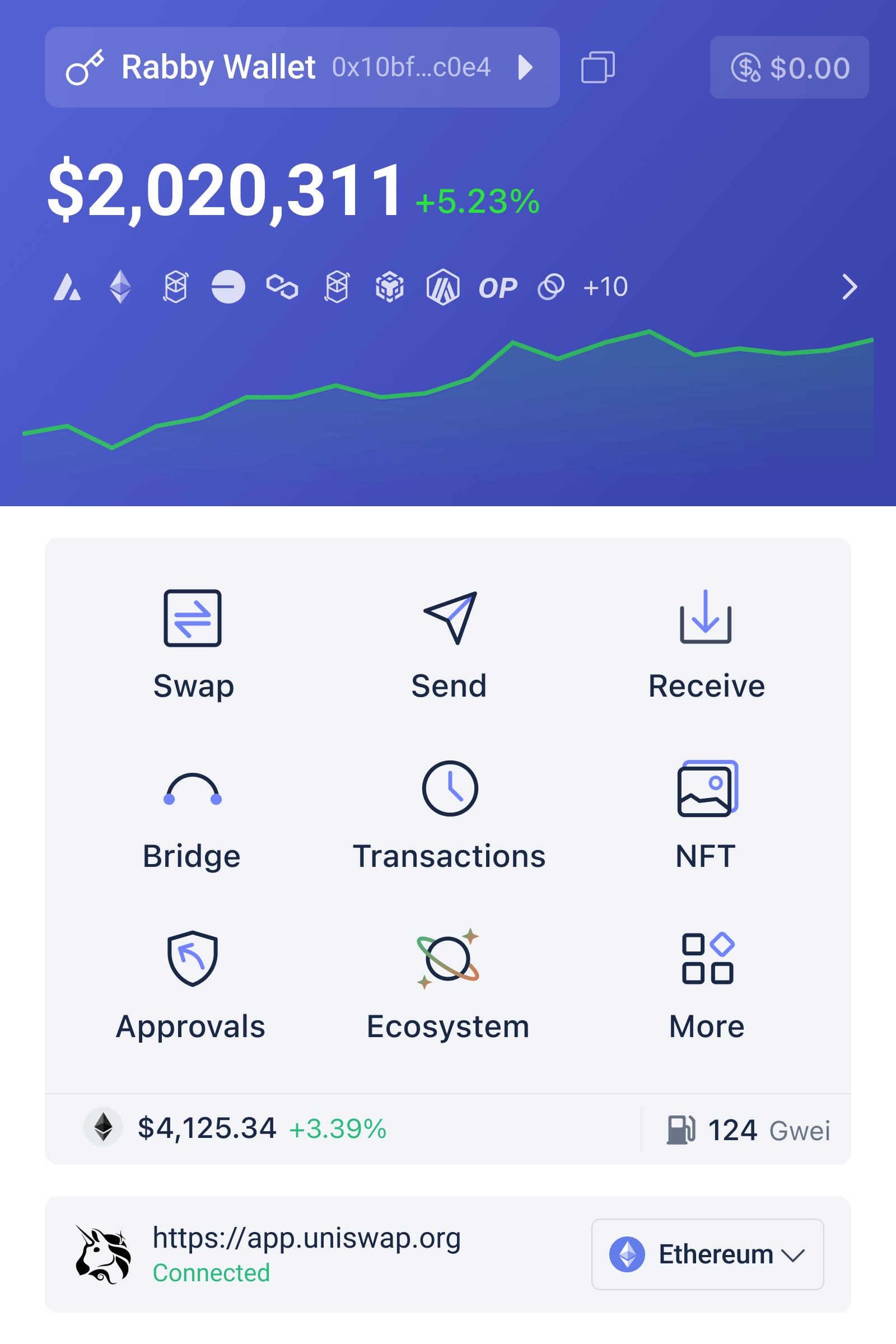
For people interacting with Ethereum and other EVM chains in the United States, a browser wallet is often the bridge between a DeFi application and a signing key. Rabby’s recent positioning as a wallet for Ethereum and EVM networks makes transaction interpretation especially relevant: the more chains and applications a user can access, the more important it becomes to maintain a consistent review process across networks.
Users should obtain the extension through a source they can verify and confirm that the browser installation matches the intended product. Those beginning the setup process can use this rabby wallet download resource as a starting point, while still checking the domain, browser permissions, and installation details before entering any recovery phrase or connecting funds.
After installation, the extension should be treated as a review surface, not a substitute for operational discipline. Before signing, inspect the network, recipient or contract, method, token amounts, approvals, and any warnings. Compare the displayed effect with the action you intended to perform. If you meant to deposit one asset but the preview suggests a different token transfer, stop. If the contract address or spender is unfamiliar, investigate rather than relying on urgency from the website.
Never enter a wallet’s recovery phrase into a website, support form, or browser pop-up that is not the wallet’s own secure setup flow. Transaction simulation cannot protect a phrase that has already been exposed. Likewise, a wallet extension cannot reverse a transfer that was intentionally signed and confirmed on-chain. Key management, device security, phishing resistance, and transaction review work together; weakening one layer can overwhelm the others.
A practical decision framework for signing
A useful review can be organized into three questions. First, identity: am I on the intended network, and is the destination contract the one the application should be using? Second, effect: which assets, balances, and permissions are expected to change? Third, dependency: does the outcome rely on a price, oracle, deadline, upgradeable contract, or other condition that may shift before execution?
The first two questions are usually accessible to non-specialists and often catch the most damaging mistakes. The third requires more context, but it is where mature DeFi risk management begins. A favorable preview does not mean a favorable investment. It means the proposed call produced a particular result under a particular state and set of assumptions.
For high-value transactions, users can reduce uncertainty by testing a smaller amount first, checking the protocol through independent channels, reviewing token and spender permissions, and avoiding rushed signatures. Hardware wallets can add protection against remote key extraction, although they do not make a malicious transaction safe: a hardware device can still sign an instruction the user approved.
What to watch as wallet security develops
The next meaningful improvements are likely to come from better interpretation rather than from simulation alone. A useful wallet could connect transaction effects with allowance history, contract reputation signals, chain context, and the user’s own stated intent. That direction is promising, but it introduces new questions: how are warnings generated, how are false positives handled, and who decides which risk signals deserve prominence?
More warnings are not automatically better. If every unfamiliar contract produces a dramatic alert, users may learn to dismiss warnings. If the system is too conservative, it may interrupt ordinary activity without helping users distinguish serious danger from normal DeFi complexity. The quality of security tooling therefore depends not only on detection, but also on explanation, prioritization, and calibrated uncertainty.
The durable lesson is simple but not simplistic: transaction simulation changes signing from a blind confirmation into an informed inspection. It can reveal likely asset movements, permissions, and execution failures before they become permanent. It cannot certify a protocol, predict every state change, or replace careful key management. DeFi users who understand that boundary gain something more valuable than a reassuring label—a reusable method for deciding what deserves a signature.
Frequently asked questions
Does transaction simulation guarantee that a DeFi transaction is safe?
No. It estimates the transaction’s effects under a particular blockchain state and can expose unexpected transfers, approvals, or failures. It does not prove that the protocol is trustworthy, that the contract cannot be exploited, or that market conditions will remain unchanged before execution.
Why should I care about a token approval if no tokens leave immediately?
An approval grants a spender permission to move the specified token later. If that spender is compromised or misunderstood, the permission can create future exposure. Review the spender and allowance amount, and consider a limited approval when the application does not need broad access.
What should I do if the simulation result does not match my intention?
Do not sign immediately. Check the network, application domain, contract address, token amounts, and approval details. A mismatch may reflect a legitimate multi-step interaction, a changed application state, or a phishing attempt. If you cannot explain the displayed effect, cancel and investigate first.