A wallet does not need to lose your money through a dramatic hack. Often, the decisive mistake happens in a single ordinary-looking approval: a token allowance granted to the wrong contract, a swap routed through an unexpected pool, or a signature that authorizes more than the user realizes. The counterintuitive lesson is that smart contract safety is not mainly about recognizing malicious websites. It is about understanding what a transaction will cause before the blockchain makes it irreversible.
That changes the role of a Web3 wallet. In the early days of decentralized applications, a wallet was largely a key manager and transaction-signing window. Today, advanced wallets increasingly act as an interpretation layer between human intent and machine-executed code. The best systems do not eliminate uncertainty, but they can expose important consequences, simulate likely outcomes, and warn when the transaction appears inconsistent with the user’s goal.
From key storage to transaction interpretation
A smart contract is a program deployed on a blockchain. It can hold assets, enforce rules, calculate prices, and respond to instructions sent by users or other contracts. A decentralized application, or dApp, is the user-facing layer that makes those instructions easier to compose. When someone supplies liquidity, exchanges tokens, mints an asset, or deposits collateral, the dApp typically constructs one or more transactions and asks a wallet to sign them.
The wallet therefore sits at a critical boundary. The dApp speaks in terms of buttons and outcomes—“Swap,” “Deposit,” or “Borrow”—while the blockchain receives contract addresses, function calls, parameters, gas settings, and signatures. A wallet that merely displays “Confirm transaction” leaves the user to bridge that gap alone. A more capable wallet can decode the call, identify the contract, estimate asset changes, and present a more useful question: what will this action probably do to my account?
This is not just a user-experience improvement. It is a security mechanism based on reducing ambiguity. If a transaction is expected to exchange one asset for another, but the decoded result shows an unfamiliar token leaving the account, the mismatch becomes a signal. Similarly, a warning about unlimited token approval matters because an approval is not the same as a one-time payment. It can give a spender permission to transfer tokens later, subject to the allowance and the contract’s behavior.
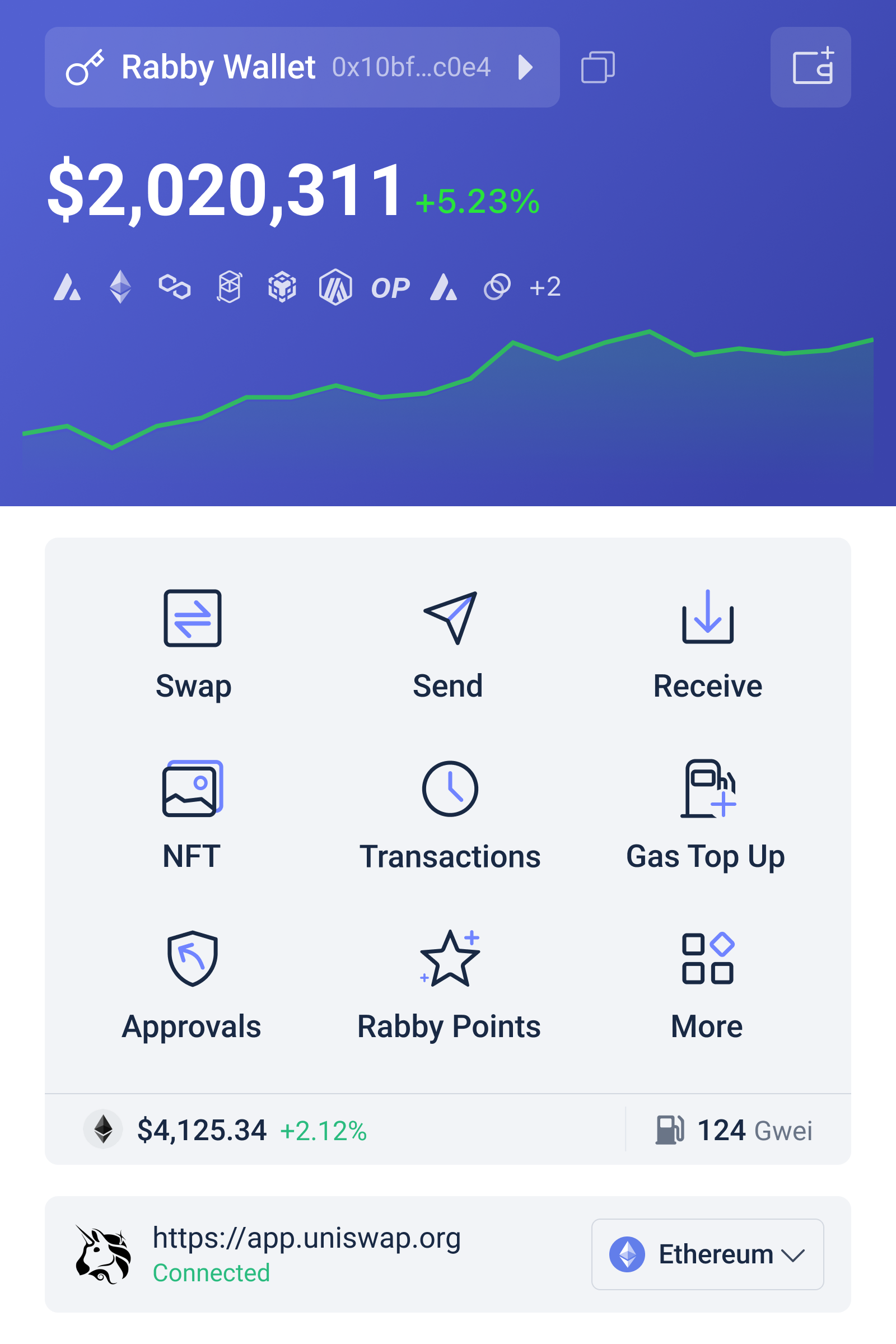
Users can explore dApps through a rabby wallet while retaining a separate review step before signing. That separation is valuable: the interface can help initiate an action, but the wallet should independently explain what the action requests. Trusting the dApp’s label alone is weaker than checking the underlying call and its expected effects.
What transaction simulation actually tells you
Transaction simulation means executing a proposed transaction in an environment that approximates the current blockchain state without broadcasting it as a final, on-chain action. The simulation can reveal whether the call is likely to revert, which assets may move, whether balances or approvals change, and whether the resulting state looks materially different from what the user intended.
This creates a sharper mental model: simulation is not a crystal ball; it is a preflight test. Like testing a software change against a snapshot of a system, it can expose many errors before they become expensive. A failed simulation may indicate insufficient liquidity, an expired quote, an incorrect network, a missing approval, or a contract condition that the dApp interface did not make obvious.
There are important boundaries. The blockchain state can change between simulation and execution. A volatile market may move, a liquidity pool may be altered, or another transaction may be included first. Some behavior depends on external data, timing, block producers, or contracts that are difficult to model perfectly. A simulation can also show that code executes successfully without proving that the contract is honest, economically sound, or free from every exploitable design.
That limitation explains why simulation should be combined with slippage controls, sensible gas settings, contract verification where available, and attention to the destination address. “It simulated successfully” is a narrower claim than “this is safe.” The first concerns predicted execution; the second includes governance, code quality, incentives, oracle assumptions, and operational risk.
Why dApp integration is both useful and dangerous
dApp integration usually relies on a wallet connection standard that lets a website request the user’s account, suggest a network, and submit transactions for approval. This makes decentralized applications accessible without requiring users to write contract calls manually. It also creates a concentrated risk: a compromised or deceptive interface can present a familiar workflow while constructing a very different transaction underneath.
The most useful distinction is between connection, signing, and authorization. Connecting a wallet generally lets a dApp see a public address and request certain messages. Signing a transaction instructs the network to execute a contract call. Signing a message may authorize an off-chain action, such as an order or permit, which can later be submitted by someone else. Granting an allowance authorizes a spender to move specified tokens under particular rules. These operations may appear close together in a browser, but their consequences are not equivalent.
Security-conscious wallet design should make those differences visible. It should identify the network, target contract, assets leaving the account, assets expected in return, approval scope, and unusual permissions. It should also distinguish a routine interaction from a high-impact one, such as setting a large allowance or signing a message whose meaning is not obvious to a non-specialist.
There is a trade-off here. More warnings can improve awareness, but too many warnings train users to click through them. Effective risk signals need context and prioritization rather than a wall of red text. A warning is most useful when it explains the mechanism of concern and gives the user a practical choice: reject, reduce the allowance, verify the address, change the network, or continue with a clearly understood risk.
A practical framework for reviewing a contract interaction
Before signing, DeFi users can apply a compact “intent, authority, outcome” check. First, state the intended outcome in plain language: “I want to exchange this amount of one token for at least this amount of another.” Second, inspect authority: which contract is receiving permission, what can it spend, and for how long? Third, compare the predicted outcome with the intention: which assets leave, which arrive, and what account state changes afterward?
This framework is reusable because it does not depend on one protocol or chain. It works for a decentralized exchange, lending market, staking contract, NFT marketplace, or bridge. It also catches a subtle category error: a transaction can be technically valid while still being economically wrong. A contract may execute exactly as written, yet the user may have selected the wrong pool, accepted excessive slippage, or interacted with a counterfeit token.
For US users, practical conditions add another layer. Different networks can use different fee assets, token representations, and contract addresses. A familiar asset on one network may not be the same asset on another. Tax reporting, sanctions compliance, and protocol eligibility can also depend on the service and jurisdiction; a wallet can help interpret a transaction, but it does not replace legal, tax, or financial advice.
What to watch as wallets evolve
The likely direction of wallet development is not simply more buttons or more supported dApps. It is better translation between intent and execution. Conditional checks, clearer permission management, simulation across multiple possible outcomes, and warnings that reflect transaction history could make signing less like approving opaque code and more like reviewing a structured action plan.
That future remains conditional. Better simulation depends on reliable state data, protocol-specific interpretation, and interfaces that do not imply more certainty than the underlying model supports. Privacy is another unresolved issue: more personalized risk analysis may require more information about wallet behavior, while users may reasonably prefer local or minimized data processing. Interoperability also matters, because a security feature that works well on one chain or transaction type may not generalize cleanly to another.
The practical signal to watch is whether wallets help users make fewer category mistakes. Can the interface distinguish an approval from a transfer? Can it explain a signed message? Can it show the difference between a contract’s identity and the dApp’s brand? Can it expose uncertainty when simulation is incomplete? Those capabilities matter more than cosmetic complexity because they address the point where most users must make a judgment.
Frequently asked questions
Does transaction simulation guarantee that a transaction is safe?
No. Simulation estimates how a transaction may execute against a particular view of blockchain state. It can reveal reverts, unexpected asset movements, and some suspicious outcomes, but it cannot prove that a contract is secure, that a protocol’s economics are sound, or that market conditions will remain unchanged before confirmation.
Why should I care about token approvals if I am only making one swap?
A token approval can authorize a contract to transfer tokens from your account later, depending on the allowance and contract design. Some users approve only the amount needed, while others grant a larger or unlimited allowance for convenience. Reviewing and reducing unnecessary allowances can limit the damage if a spender is compromised or used in an unintended way.
What is the most important wallet warning to investigate?
Prioritize warnings that conflict with your stated intent: an unfamiliar contract, unexpected assets leaving the account, an unusually broad approval, a network mismatch, or a result that differs from the dApp’s description. A warning is not automatically proof of fraud, but unexplained divergence is a strong reason to stop and verify before signing.
The central idea is simple but easy to miss: a wallet is not merely where keys are stored. It is where a human decision meets executable code. The strongest dApp integration preserves that pause between request and signature, using decoding and simulation to make the consequences legible while remaining honest about what those tools cannot know. In DeFi, that pause is not friction for its own sake. It is part of the security model.